When I first opened The Lift Shaft, I had a little devil on my shoulder (also in the form of my partner and friends) telling me that the space I’d just rented, a 2.1 by 2.1 metre top floor of an upright shipping container, just wouldn’t work. For a moment, amid all the noise, I almost believed it too.
I hear this a lot: “I’d love to build an escape room, or an experience, or something, but I just don’t have the right space.” The truth is, there’s no such thing as the perfect space. There’s just space, and what you do with it.
My early mistakes weren’t in the space I chose, but in how I used it. As I’ve grown as an experience designer, I’ve fallen in love with one simple idea and leant right into it: I can create anywhere.
The Power of Constraints
I think I’ve touched on this in every post I’ve written, but it really does bleed into my whole design ethos. Space is one of the best constraints you can have, especially if “unique” is your thing.
Every creative person knows that limitations can be a gift, but in spatial design, they’re often your secret weapon. When you can’t rely on spectacle, you’re forced to think differently. You focus on tension, pacing, storytelling and how players interact with the world around them.
Every space I’ve designed for has needed that something extra. Personally, I was never interested in building another spaceship, Sherlock Holmes or wizard-themed room, so the spaces I found helped shape my experiences into something unique, intimate and full of character. (I wrote more about this in What Makes an Escape Room Truly Unique?)
Design With the Space, Not Against It
When you walk into a potential venue, don’t start by imagining how to hide its flaws. Look for what makes it special. What’s the natural personality of the space? The texture of the walls, the hum of the lights, the echo: these are all storytelling tools. They’re clues to what the experience wants to be.
A low ceiling might suggest tension and claustrophobia. A random alcove? That’s a ready-made hiding place.
The trick is to collaborate with the space and let it tell you what kind of story it wants to hold. Something I learnt in my many years as a musician is that you’re not fighting the instrument into submission; you’re having a conversation with it. The same goes for design. Converse with the space. It’s telling you things, and we should all listen.
Removing Peripheral Awareness: A Magician’s Trick for Small Spaces
What is peripheral awareness? It’s something most escape room designers want players to keep. Solving puzzles in an escape room almost always needs your team to be aware of everything around them, and we encourage that in our design with sounds, smells, colours and lights. We pull our players’ attention around the room.
But what if we don’t want that? Imagine an experience that demands focus and attention on one small, intimate space. An experience that makes the participant forget everything around them. It’s a tool that really helps when designing for small spaces, and it’s something I learnt in my time as a professional magician.
Some might call that misdirection, and while it’s similar, it’s different. As a conjuror, I’m trained to pull attention away from the sneaky stuff happening right in front of people’s eyes. Removing someone’s peripheral awareness is about pulling them in closer: letting them see everything in front of them while forgetting everything else.
Pulling focus in works just as well as, and sometimes better than, having lots of points of focus in a large room.
Making Small Spaces Feel Big
Let’s get practical for a second. If you’re designing in a small or awkward location, there are a few tricks that can make the space feel expansive:
- Design the journey, not just the layout. Think about emotional flow before physical flow: moments of pressure and release.
- Play with light and sound. These tools can “stretch” a room in the player’s imagination, creating distance and atmosphere. Darkening or lightening a corner can have a massive impact on how big a space feels, and different sound levels create distance in players’ minds.
- Use verticality. Don’t just build out; build up (and down). People rarely look above or below eye level in games, so changing that adds new levels to your experience. In The Lift Shaft, we designed puzzles that make players look above eye level. It’s a constant reminder of the height of the shaft, and it creates more tension.
- Keep movement purposeful. A small space can still feel dynamic if players are always chasing meaning, not just walking around. Even if they’re only following the walls in one direction around the room, a narrative purpose makes it feel energetic and pressured.
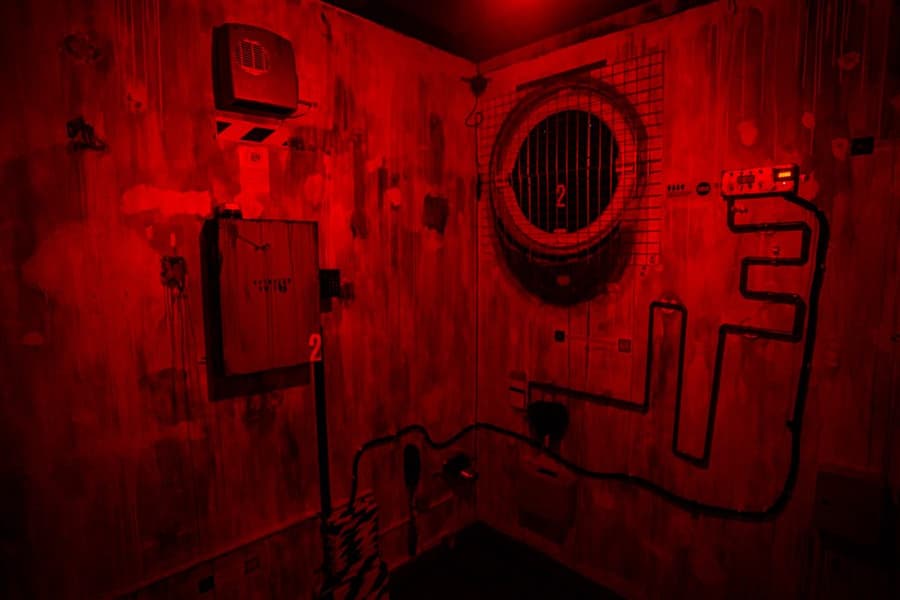
Remember: immersion doesn’t come from square footage. It comes from focus, rhythm and imagination. (It’s also why I don’t think every escape room needs multiple rooms.)
A Real-World Example: Seconds From Disaster
I’ve built escape rooms in places many people wouldn’t look twice at, and the immersion and design are what players praise them for. They’re memorable because of the uniqueness those spaces inspired.
Seconds From Disaster is a good example of making the most of a small, awkward space. It’s a different type of experience from our escape rooms: a tabletop puzzle game where you solve the mystery, then take the controls and land the plane on a real flight simulator. It all happens in a tiny passenger cabin with one row of seats and one door leading to the cockpit. It’s tight… but that’s exactly what makes the experience so immersive and realistic.
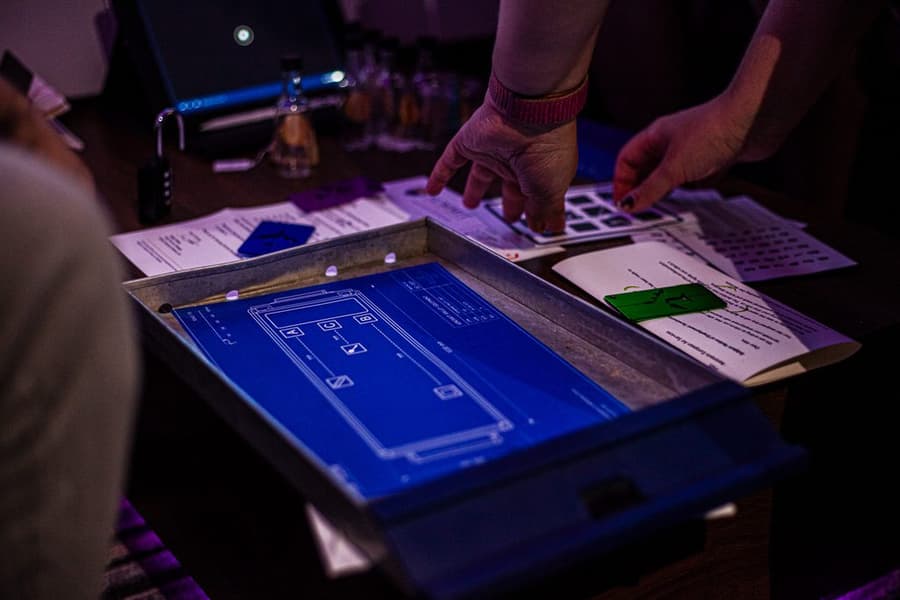
Ever tried moving around on a plane? Now imagine solving puzzles on one. It wouldn’t be comfortable, but nobody would question the space either. That space gave me plenty of constraints to work with, and they’ve driven me to make it something special.
The Magic of Making Something From Nothing
Every designer dreams of the perfect blank canvas, but in truth, the most interesting work often comes from painting over the cracks.
You don’t need a warehouse to build wonder. You just need imagination, a willingness to listen to your space and sometimes, yes, a literal hole in the wall.
Because when players step into your world, they won’t care about the square footage. They’ll remember how it felt.
Want to see what a 2.1 metre square can do? Book The Lift Shaft in Brighton, or find out more about our escape room design work.