Let’s be honest, the escape room industry has blown up over the last decade. Escape rooms are almost everywhere these days, and if you’re reading this, you’ve likely played a fair few.
You’ve probably stopped a ticking bomb from going off somewhere, stopped a virus from escaping a lab, solved a mystery in a world Sir Arthur Conan Doyle would be proud of, or searched for buried treasure in a lost tomb.
Don’t get me wrong, these can be stunning escape room themes. But even as I was typing that last paragraph I felt a sense of… déjà vu. It’s too familiar. I’ve seen those words in too many room descriptions, and that’s the problem.
In an industry that’s grown as much as this one, it does feel like it’s hitting a peak, and it makes me wonder whether the recycling of themes and puzzles has something to do with that. The magic of surprise is getting lost somewhere.
What Makes an Escape Room Truly Unique?
It’s not going to be a different shade of paint or a clever new puzzle that makes your room unique. When I put my first room together, I couldn’t wait to tell people we were the only lift shaft escape room in the UK (as far as I know!), but that isn’t enough on its own.
A unique theme is great if it’s truly unique, but I’ve seen the word “unique” stuck on themes that are everywhere, so the effect wears off quickly. Even so, our players still gave us that “unique” stamp of approval. Here’s why I think that happened: it comes down to the where, the how and the why.
The Where: Create to the Space
I don’t think I’d be the only person to say your premises really matter for an entertainment venue like ours. That said, even premises stop feeling unique after a while.
As I write this, my business has been running for a little over two years, and in that time I’ve built one ethos into every experience: always create to the space. In other words, never settle on your idea before you find your venue.
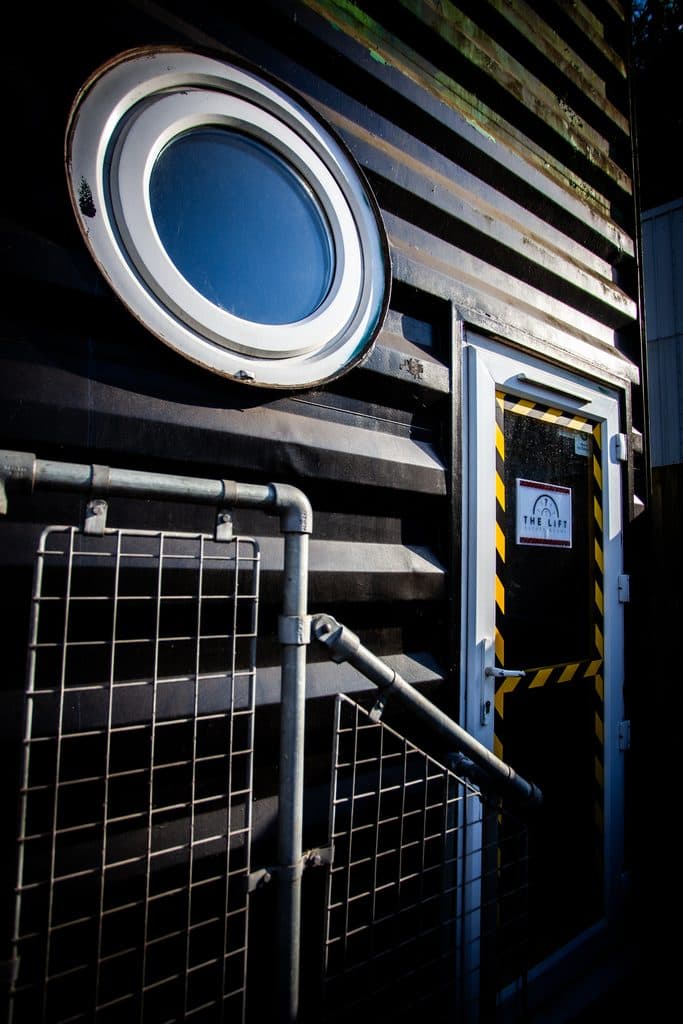
Our first room was, and still is, the top half of a vertical shipping container. It already screams unique. So we set out to create a game that worked in that space. We certainly couldn’t build a pirate ship! It was industrial, small (it really is: 2.1 metres by 2.1 metres!) and plain, which mostly worked in our favour.
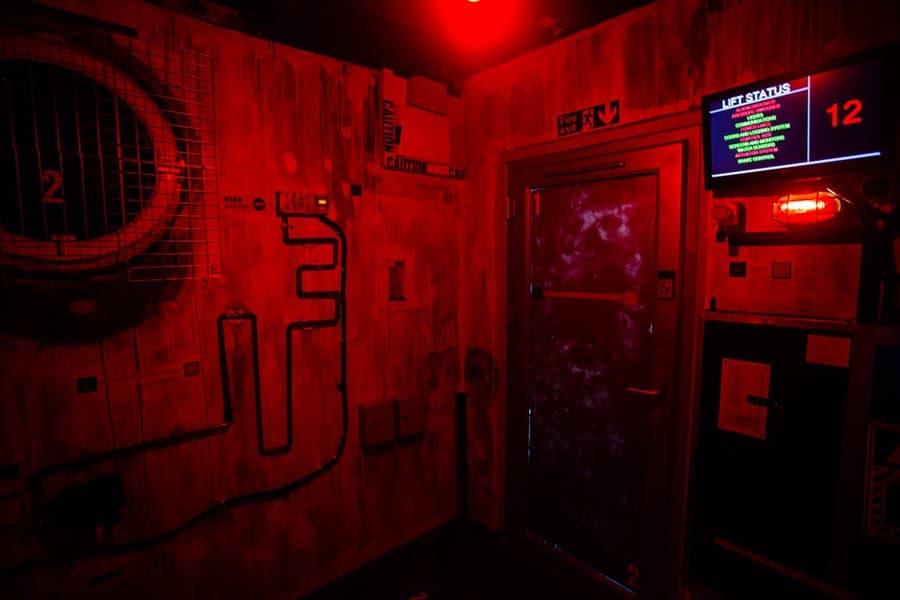
“A lift!” I shouted out loud while mulling over ideas. Nothing clicked at first. I’d seen lift escape rooms before and couldn’t find a storyline that felt good enough. But from that idea, The Lift Shaft was born.
Ever since then, I’ve never looked at a shop front or a large multi-room complex to run my games. What gets me excited is finding a totally different space that could hold an experience, because that’s often where something a bit different comes from. Maybe more experiences in unusual spaces is exactly what the industry needs to spice things up.
The How: Build It Yourself (and Recycle What You Can)
The “how” is exactly what it sounds like. How did you make your room? Did you buy a ready-made room and install it? Did you build everything yourself? Was your vision built by someone else?
Each has its merits, but I’d put a lot of money on you knowing which one allows for the more unique creation.
Buying a ready-made escape room puts you on the back foot from the start. You’re buying a room that’s almost certainly running somewhere else, so your uniqueness has already evaporated. That said, this happens less these days, as decent build companies usually take precedence.
I’m not saying everyone has to do what we did, but it certainly gave us a unique twist: we hand-built everything and recycled as much as we could. The recycling was the real focus. Street finds, car boot sales, family and friends clearing out their lofts: anything could become a puzzle or a task, and much like our venues, those finds paved the way for puzzles you won’t see anywhere else.

So look at the things you’re about to throw out. Could it be a puzzle? If yes, you’re likely onto a winner, and you’re saving some landfill space at the same time.
The Why: Make Players Feel It Before the Game Starts
You might read all that and think, “Well, that’s obvious!” But there are a few things I think people forget.
Consider what you want your players to actually feel, and when. For me, aside from the obvious, I want players to be wowed from the moment they walk in. A gasp at the monochrome visual overload of Comic Chaos, the apprehension of stepping into a small, delicate lift shaft, or the rush of walking into a basement rock bar. It’s an amazing feeling when people call you unique before the game has even started.
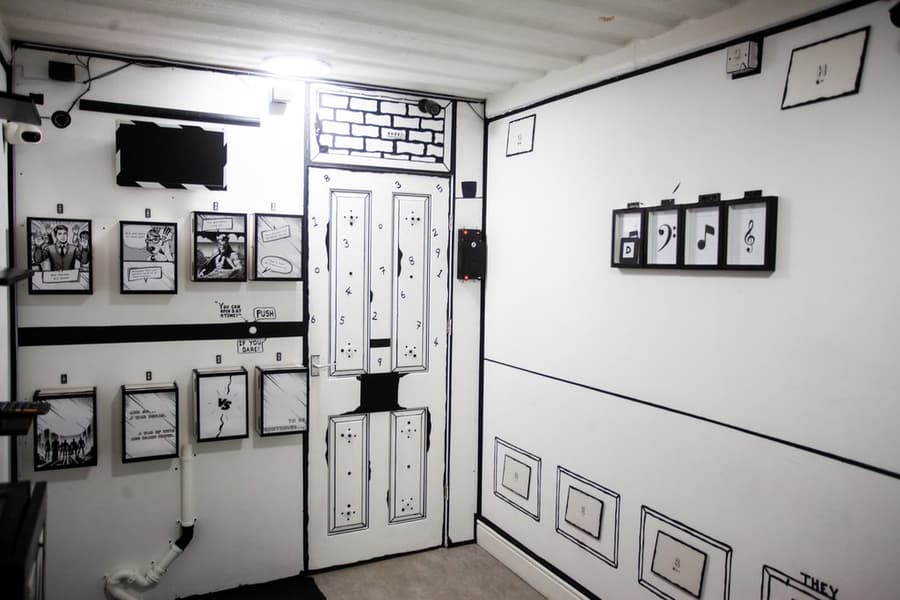
That’s what I think the industry should strive for: making people believe you’re unique before the game has even started.
There’s a lot more I want to write about this, but I’m splitting it up so it’s not too much in one go. Stay tuned for the next part!
Want to see what we mean? Book an escape room at The Lift in Brighton and judge for yourself.